

China Tourist Visa (L Visa): Requirements, Documents & Application Guide 2026
Everything you need to know before applying for a Chinese tourist visa — documents, invitation letters, fingerprints, and the full application process.
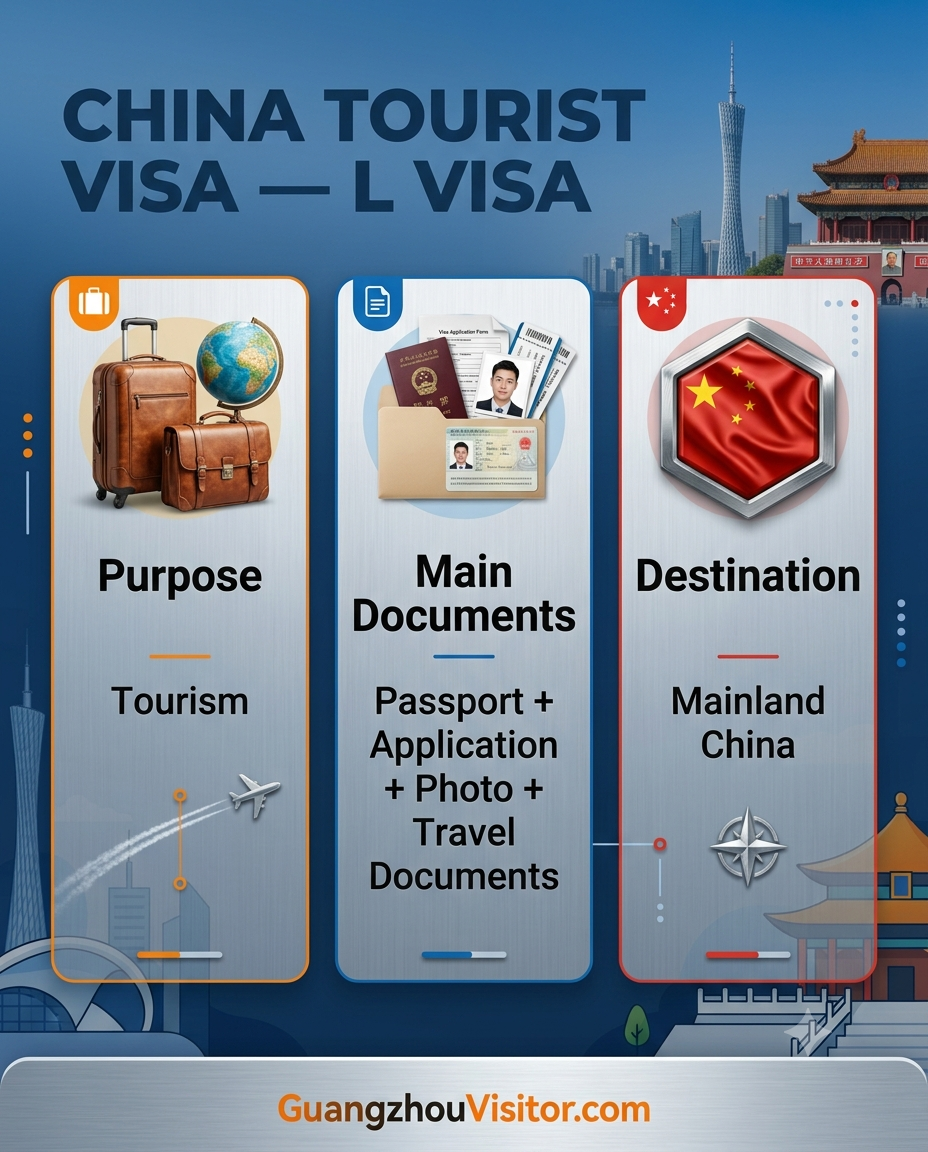
Quick Answer: What Is the China Tourist Visa?
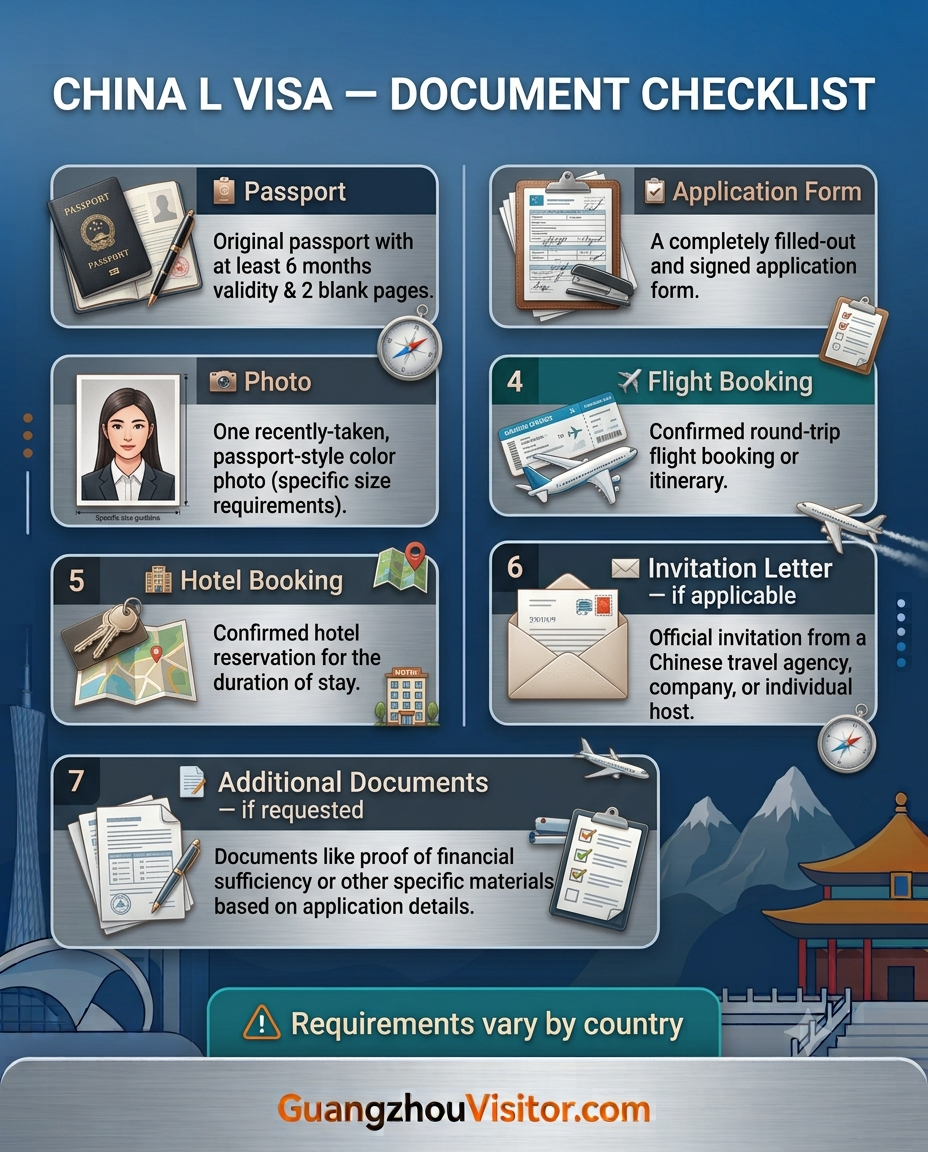
The China Tourist Visa (L Visa) is issued to foreign nationals traveling to mainland China for tourism. Chinese visa authorities classify L as the tourism category, while M is the category for commercial and trade activities.
If you’re planning a normal holiday in Guangzhou and you’re not covered by a visa-free entry policy, the L Visa is generally the category to investigate.
Your visa contains three separate pieces of information — don’t confuse them:
- Visa validity — the period during which the visa can be used
- Number of entries — how many times you can enter China
- Duration of stay — how long you may remain after each entry

Before you start: Check whether your passport already qualifies for visa-free entry — applying for a visa you don’t need wastes time and money. Read our China Visa-Free Entry (2026) guide first.
What Is the L Visa Used For?
The L Visa is intended for tourism in mainland China — sightseeing, cultural experiences, visiting attractions, leisure travel, and exploring Chinese cities.
Paris → Guangzhou → Shanghai → Paris
London → Beijing → Xi’an → Guangzhou → London
The key requirement: the primary purpose of the trip must correspond to tourism.
China’s Luxury Bullet Train
Planning a multi-city tourist itinerary like Guangzhou → Shanghai? Book your high-speed rail tickets between cities in advance to lock in your route.
China Tourist Visa Requirements
The exact checklist depends on where you apply. The Chinese Ministry of Foreign Affairs’ Online Visa Application (COVA) guidance identifies the following core materials, with additional requirements set by your local embassy or consulate.
Valid Passport
A valid ordinary passport with at least 6 months remaining validity and at least 2 blank visa pages is commonly required. Depending on your circumstances, you may also need copies of your passport information page, previous Chinese visas, or previous passports.
China Visa Application Form
Many Visa Application Service Centers now use an online application and document-review process: create an account, complete the form, upload documents and photo, submit for review, then print and submit originals. The exact procedure varies by country.
Passport Photograph
A recent, color, front-facing photo with a bare head and appropriate light-colored background is normally required. Don’t assume a photo accepted for another country’s visa will automatically meet China’s requirements — check exact specifications with your visa center.
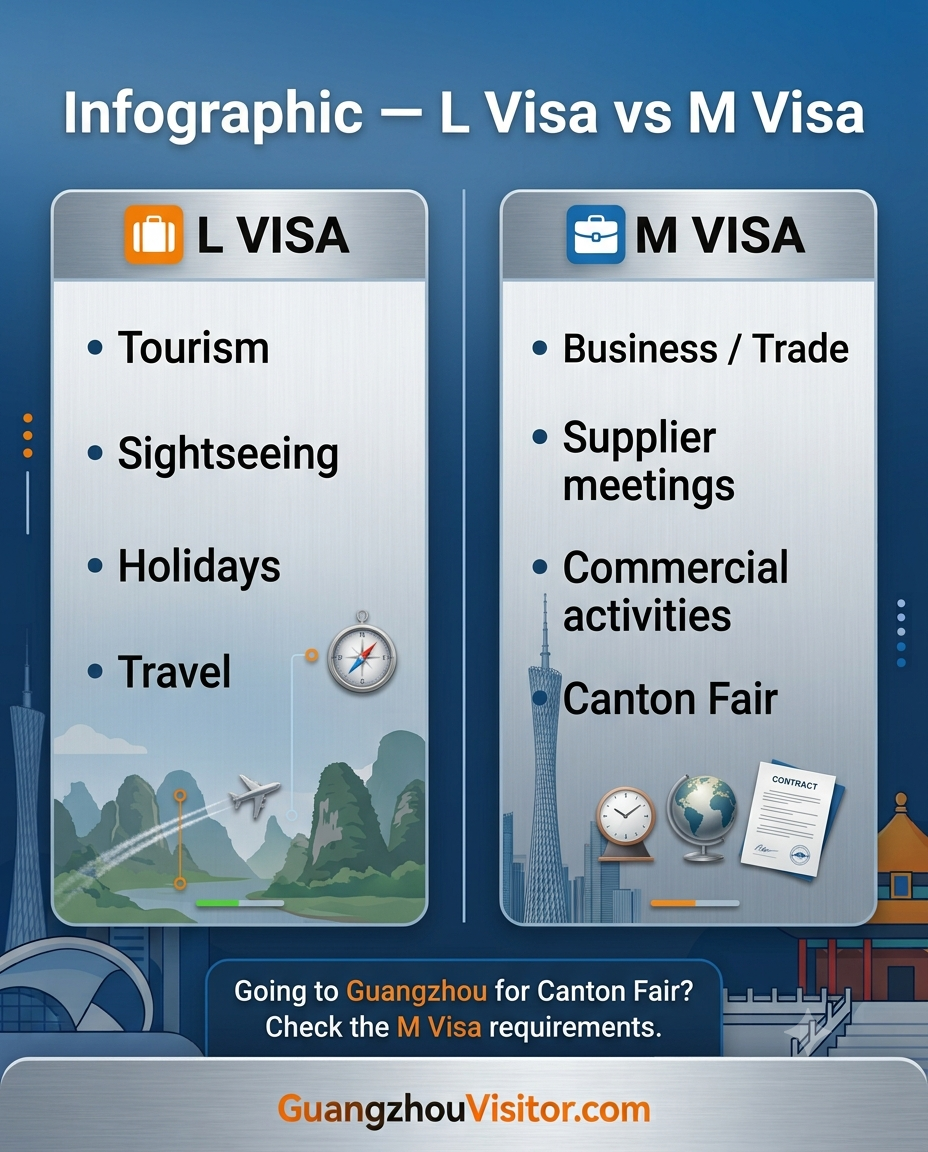
Proof of Your Travel Itinerary
You may need a round-trip air ticket booking, hotel booking, and other itinerary materials — or an invitation letter from an entity or individual in China.
Keep your application, flights, hotels, and dates consistent with one another. For example, “Paris → Guangzhou → Shanghai → Paris” should not be accompanied by hotel reservations suggesting an entirely different trip.
Do You Need an Invitation Letter?
Not always mandatory — national guidance allows itinerary documents OR an invitation letter. However, local visa centers may request more. Check your local checklist rather than assuming another country’s requirements apply to you.
What Should a China Tourist Invitation Letter Contain?
Where an invitation letter is used, official guidance specifies three main groups of information:
1. Applicant Information
- Full name
- Gender
- Date of birth
- Passport details where required
2. Trip Information
- Arrival and departure dates
- Places to be visited
- Travel arrangements
- Accommodation information where applicable
3. Inviter Information
- Name of inviting person or organization
- Address and telephone number
- Official organization stamp where applicable
- Signature of legal representative or individual
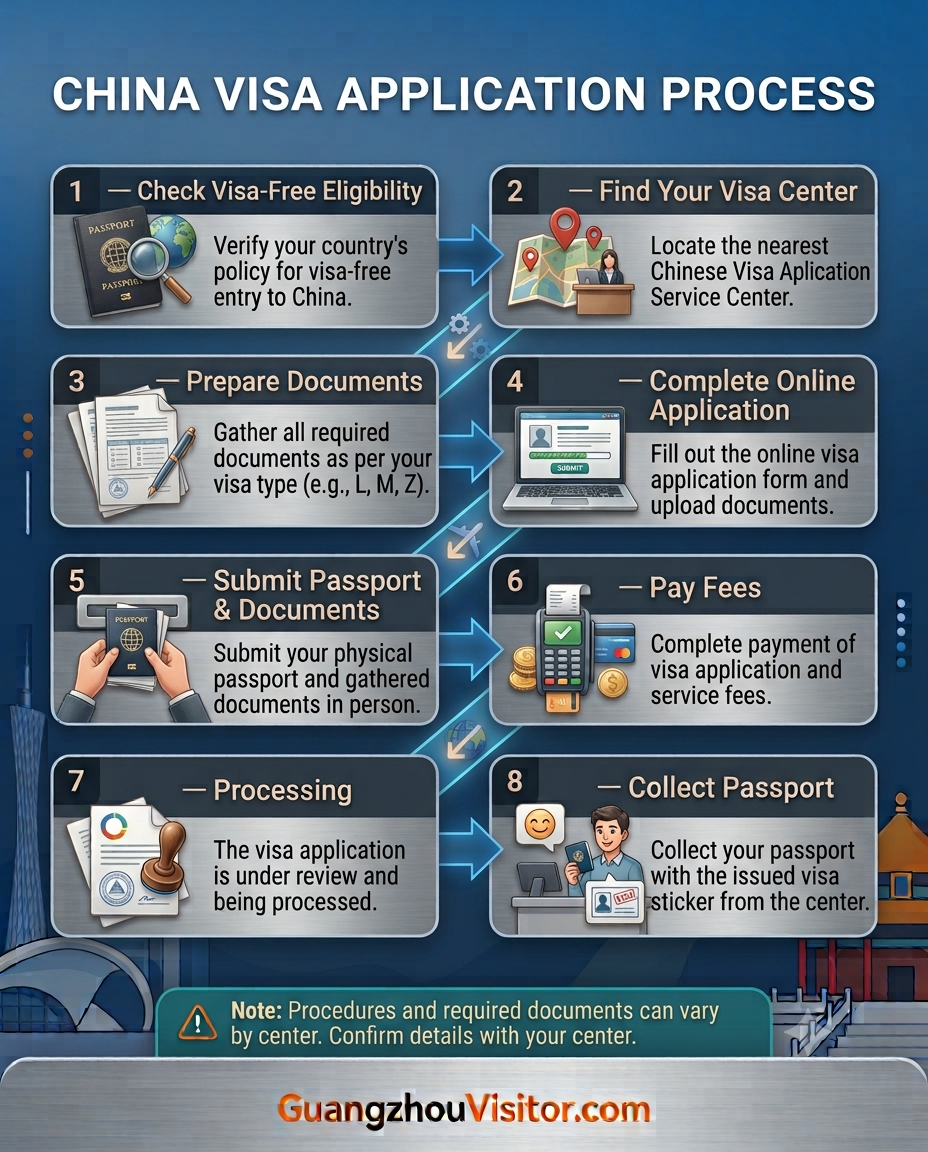
China Tourist Visa Application Process
The exact procedure varies by country, but the general process is usually similar.
Check Whether You Need a Visa
Determine whether your nationality and itinerary qualify for visa-free entry first. Read our China Visa-Free Entry (2026) guide.
Identify the Correct Chinese Visa Authority
Find the embassy, consulate, or authorized Visa Application Service Center responsible for your place of residence — checklists vary between jurisdictions.
Check the Current Local Checklist
Before booking non-refundable travel, review required documents, invitation-letter rules, financial documents, fees, and submission method for your specific location.
Complete the Online Application
Where available, complete the application and upload requested documents. Some centers review applications online before physical document submission.
Wait for the Application Review
Your application may be accepted, returned for correction, subject to additional-document requests, or referred for an interview.
Submit Your Passport and Documents
Submit your original passport, printed application documents, photograph, and supporting documents as instructed by your local center.
Pay the Visa and Service Fees
There is no single worldwide price — cost depends on nationality, application country, entries, processing speed, and service fees. Check your responsible visa authority’s current fee schedule.
Collect Your Passport
Options may include in-person collection, postal return, or courier service — availability varies by jurisdiction.
Do You Need to Give Fingerprints?
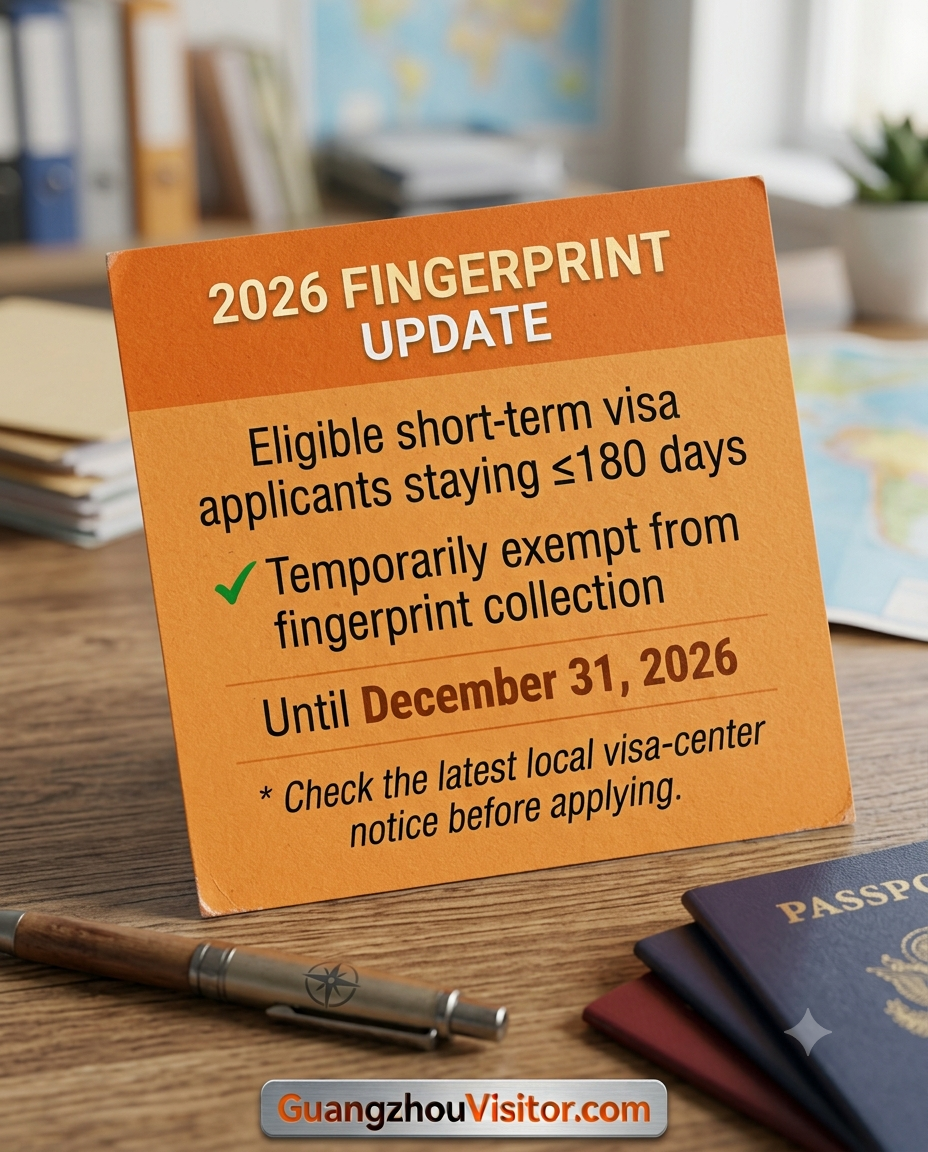
Currently Exempt (Until Dec 31, 2026)
Short-term visa applicants with an intended stay of 180 days or less are exempt from fingerprint collection under the temporary 2026 policy.
Not Covered by the Exemption
Visa categories requiring residence permits after entry — D, J1, Q1, S1, X1, Z — still require fingerprint collection.
This exemption is temporary. Always check the latest notice from your local Chinese visa authority before applying.
Fees, Processing Time & Number of Entries
When Should You Apply?
Don’t leave your application until the last minute — but also don’t assume you can submit months in advance. Some Chinese visa authorities use a roughly three-month application window before travel, though this isn’t universal. Follow the current instructions of the authority handling your application.
Processing Time
There is no single processing time that applies worldwide. It depends on your country of application, the visa center, the processing service selected, and whether additional documents or an interview are requested. Start preparing early to allow time for corrections, delays, and public holidays.
Visa Fees
There is no single worldwide price. Cost depends on nationality, country where you apply, number of entries, processing speed, and visa-center service fee — always check the current fee schedule of your responsible Chinese embassy or Visa Application Service Center.
Single Entry vs. Multiple Entry
Single Entry
Enter mainland China once using the visa.
Double Entry
Enter mainland China twice, subject to the visa’s conditions.
Multiple Entry
Enter multiple times during the visa’s validity period, subject to printed conditions.
Visa Validity vs. Duration of Stay
One of the most commonly misunderstood parts of a Chinese visa.
Visa Validity
The period during which you can use the visa to enter China.
Number of Entries
How many times you can enter China using that visa.
Duration of Stay
The maximum permitted period of stay after each entry.

L Visa vs. M Visa: Which One Do You Need?
This distinction is particularly important for travelers coming to Guangzhou.
Planning to attend the Canton Fair, meet suppliers, or source products? Review the M Visa requirements rather than assuming an L Visa is appropriate. See our upcoming China Business Visa (M Visa) Guide.
Even if you also plan to spend several days sightseeing, the main purpose of your trip determines the correct visa category.
Guangzhou Culture Tour
Once your L Visa is approved, make the most of your time in Guangzhou with a guided culture tour — temples, heritage streets, and local traditions with an English-speaking guide.
Can You Visit Guangzhou With an L Visa?
Yes. If you hold a valid L Visa and are admitted under its conditions, Guangzhou can be part of your tourism itinerary — Cantonese culture, Chinese cuisine, historic neighborhoods, museums, shopping markets, Pearl River cruises, and the Canton Tower.
International travelers can arrive through Guangzhou Baiyun International Airport, the city’s major aviation gateway.
Flying in from Singapore? See our Singapore to Guangzhou Flight Guide. And before you pack, check our China Airport Power Bank Rules (2026) to avoid confiscation at security.
Can You Use an L Visa for the Canton Fair?
If your primary purpose for visiting Guangzhou is attending the Canton Fair, meeting suppliers, sourcing products, or commercial negotiations, review the M Visa requirements rather than assuming an L Visa is appropriate. China classifies L for tourism and M for commercial trade.
Planning a Canton Fair trip? See our Canton Fair Travel Guide.
Common China Tourist Visa Mistakes
Applying Without Checking Visa-Free Entry
Some travelers prepare a visa application without first checking if their nationality is covered by a visa-free policy.
Choosing the Wrong Visa Category
Tourism and commercial trade are different purposes — investigate the M Visa if your main purpose is commercial.
Assuming Every Country Has the Same Requirements
General L Visa requirements are not necessarily the complete checklist for every country.
Providing Inconsistent Documents
Your application form, flights, hotels, and travel dates must tell a consistent story.
Assuming an Invitation Letter Is Always Mandatory
National guidance allows itinerary documents OR an invitation letter — but local authorities can add requirements.
Ignoring the Temporary Fingerprint Exemption
Since this is a temporary policy, check again before applying.
Applying Too Late
Incomplete applications or additional-document requests can create delays — leave enough time.
Assuming a Visa Guarantees Entry
Final admission is determined by Chinese border authorities, not the visa itself.
China Tourist Visa Checklist
The exact checklist can vary significantly by jurisdiction — use this as a preparation tool, not a replacement for official local requirements.
Frequently Asked Questions
Not necessarily. China currently has several visa-free entry arrangements. Whether you need an L Visa depends on your nationality, itinerary, and the exemption policies that apply to your trip.
The L Visa is the Chinese visa category for foreign nationals traveling to mainland China for tourism.
Common requirements include a passport, application form, photograph, and travel itinerary documents such as flight and hotel bookings. An invitation letter or additional supporting documents may also be required.
Not necessarily. National guidance allows itinerary documents such as flight and hotel bookings, or an invitation letter. Your local visa authority may have additional requirements.
It depends on your application’s requirements. An invitation letter may be accepted instead of itinerary documents, but individual visa centers can impose additional requirements.
Eligible applicants for short-term visas with a stay of 180 days or less are currently exempt until December 31, 2026. This is a temporary policy — check again before applying.
The current temporary exemption covers eligible applicants staying no more than 180 days. Some centers publish additional age-based exemptions — check your local authority’s specific rules.
Processing times vary by country of application, visa center, service selected, and individual circumstances. Additional-document requests or interviews can affect timing.
Prepare documents in advance and apply within the window permitted by your local Chinese visa authority — often around three months before travel, though this isn’t universal.
There is no single worldwide fee. Cost depends on nationality, application location, number of entries, and processing service — check your responsible visa authority’s current fee schedule.
If your primary purpose is commercial or trade activity, review the M Visa requirements instead. China classifies L as tourism and M as commercial trade.
No. The L Visa is intended for tourism only. For employment or study, investigate the appropriate visa category.
Don’t assume an L Visa can simply be extended. Contact the relevant local Chinese immigration authority before your permitted stay expires. Never overstay.
No. A visa allows you to travel to China and request entry, but final admission is determined by Chinese border inspection authorities.