Hello dear reader, and welcome. I’m Jinhua, from Guangzhou – a city that lives and breathes tea. You already know I love sharing stories about this amazing city, just like when I wrote about Following a Local in Yuexiu Park and explored the beauty of Guangzhou’s hidden corners. Today, I want to take you on a different journey – into the world of tea.
Not as an expert. But as a friend who drinks tea every single day.
Why Six Teas from One Plant?
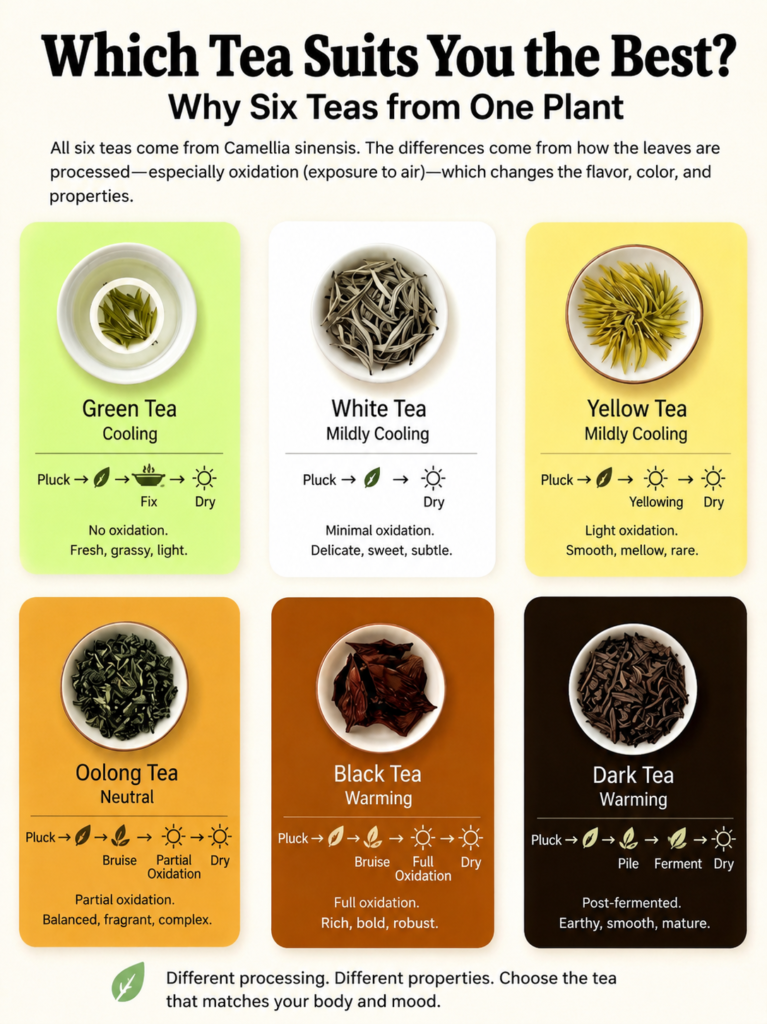
Here’s something that surprised me when I first learned it: all six types of tea come from the same plant – Camellia sinensis. The difference isn’t the leaf. It’s what we do to the leaf after picking it.
The main factor is oxidation. Think of an apple slice turning brown when left out. That’s oxidation. Tea leaves are carefully oxidized to different levels, creating completely different flavors, colors, and even “energies” – what traditional Chinese tea culture calls cooling, neutral, or warming natures.
Let me walk you through each one:
1. Green Tea – Cooling (Unoxidized)
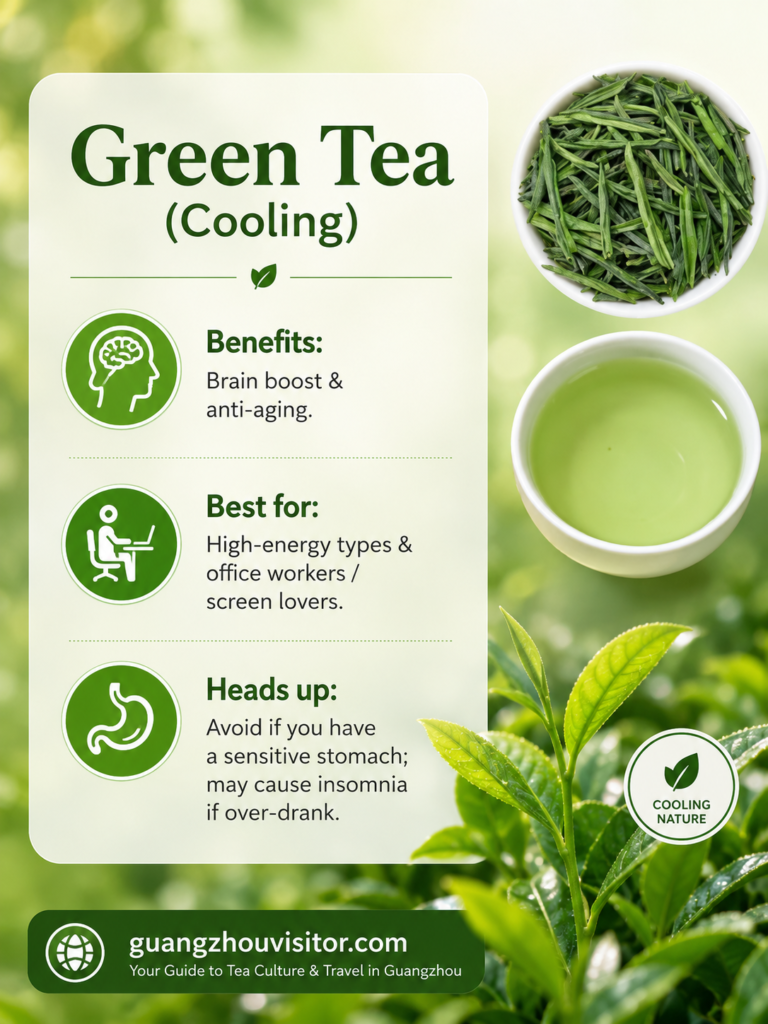
Green tea is not oxidized at all. The leaves are picked and quickly heated (by steaming or pan-firing) to stop any oxidation from happening. This locks in the green color and fresh, grassy, or vegetal flavors.
What the experts say:
According to research compiled by the National Library of Medicine (NCBI), green tea is rich in catechins – a type of antioxidant that may help reduce inflammation, support heart health, and improve mental alertness. Unlike coffee, green tea contains L-theanine, an amino acid that creates a calm-but-focused state rather than jitters.
My personal take:
Green tea is my morning ritual. It’s cooling in nature, which means traditional Chinese wisdom recommends it for people who tend to feel warm or have a “hot” constitution. On humid Guangzhou mornings, a cup of green tea helps me feel balanced and refreshed.
Who is it for?
If you run warm, live in a hot climate, or want a gentle energy boost – start here.
2. White Tea – Mildly Cooling (Minimally Processed)
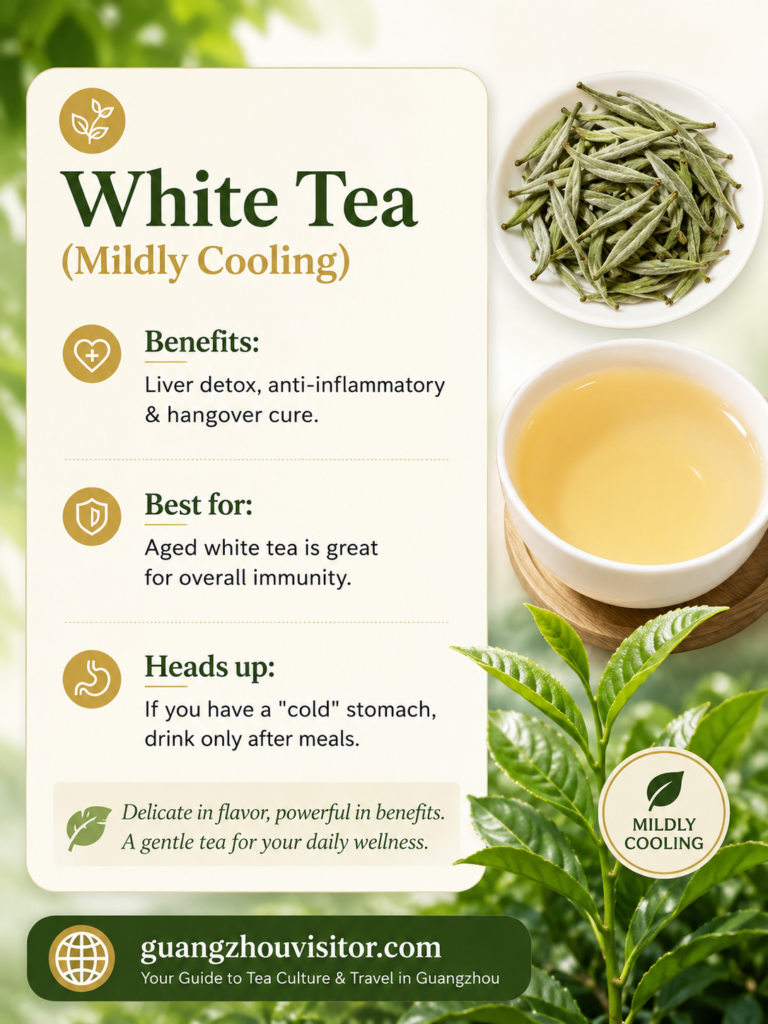
White tea is the least processed of all. Only the youngest leaves and buds (often covered in white fuzz) are picked, then simply withered and dried in natural sunlight. No heating, no rolling – just patience.
What the experts say:
Teatulia explains that white tea has the most delicate flavor profile – often described as sweet, hay-like, or honeyed. Because it’s so minimally processed, it retains high levels of antioxidants, some studies suggesting even higher than green tea.
My personal take:
White tea is mildly cooling – softer and gentler than green tea. I drink this on quiet afternoons when I don’t want strong flavors. It reminds me of the light, sweet taste of Guangzhou’s traditional tong sui desserts – subtle, comforting, and never overwhelming.
Who is it for?
Perfect for beginners, for sensitive stomachs, or for moments when you want to relax without falling asleep.
3. Yellow Tea – Mildly Cooling (The Rare One)
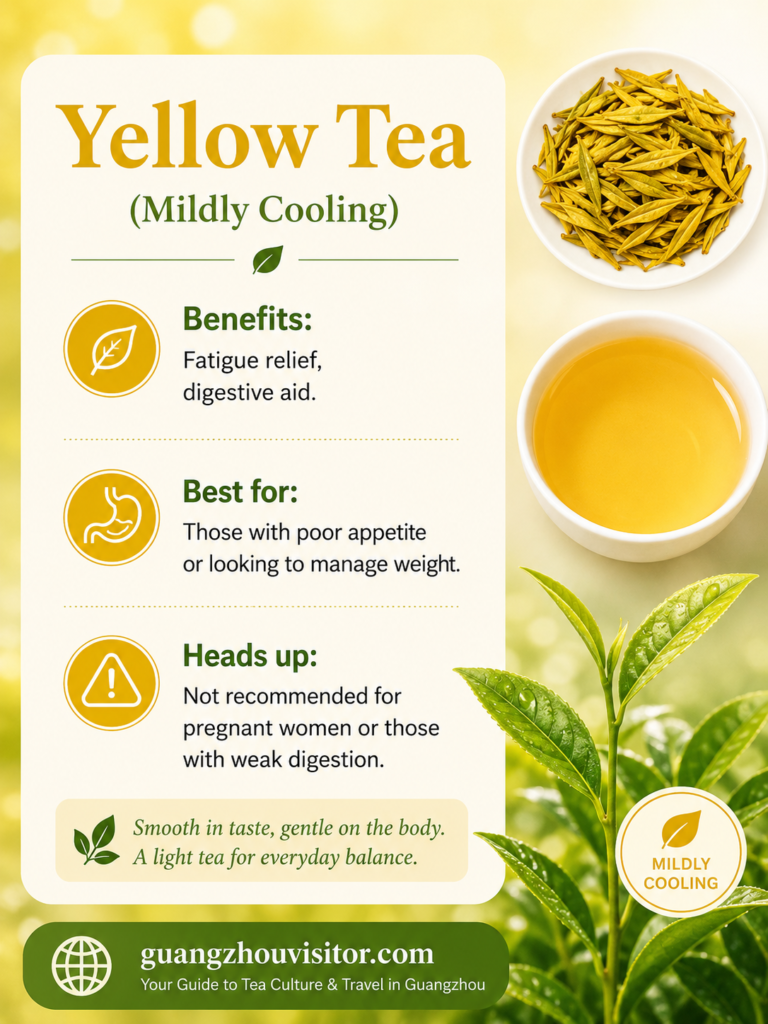
Yellow tea is like green tea’s mysterious cousin. It goes through the same initial process as green tea, but with an extra step: smothering. The leaves are wrapped in paper or cloth and left to sit. This allows a very slight, controlled oxidation that removes the “grassy” edge of green tea.
What the experts say:
Tea Guardian notes that yellow tea is one of the rarest teas in the world, even unknown to many tea drinkers. The flavor is smooth, mellow, and nutty – without the astringency of green tea.
My personal take:
Yellow tea is also mildly cooling. I discovered it by accident in a small tea shop near Fangcun market. It’s become my secret recommendation for friends who say “I want to like green tea, but it’s too bitter.”
Who is it for?
Tea lovers looking for something unique, or anyone who finds green tea too sharp.
4. Oolong Tea – Neutral (Partially Oxidized)
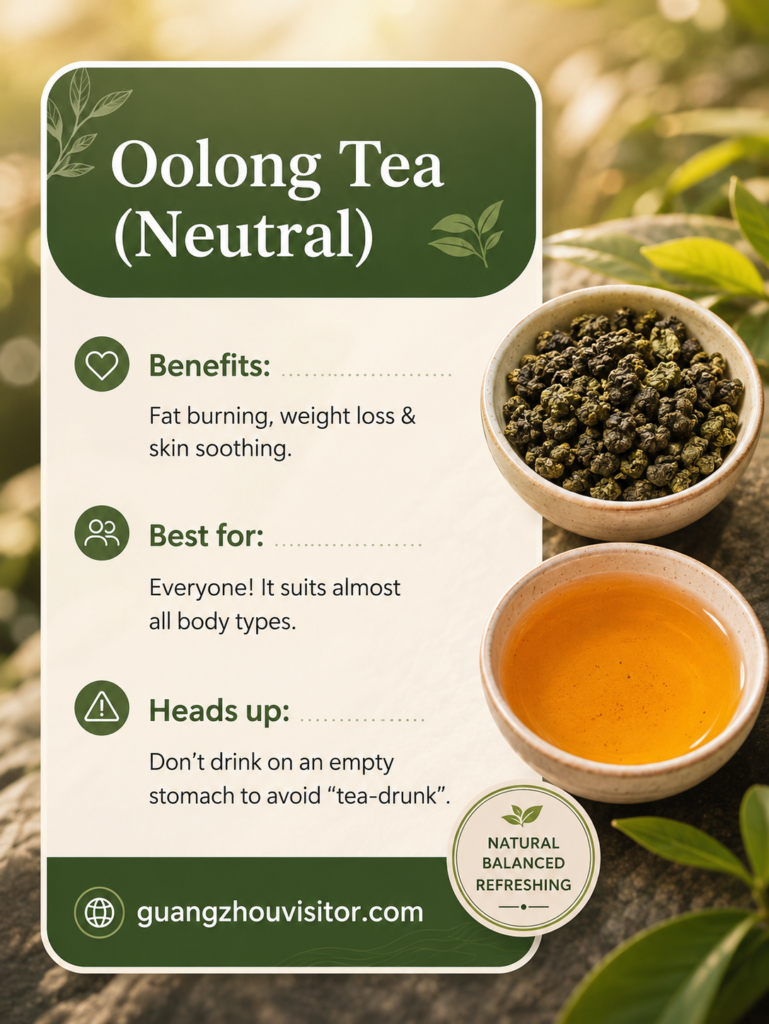
Oolong sits beautifully in the middle – anywhere from 10% to 80% oxidized. This wide range means oolong can taste floral, fruity, creamy, toasty, or even roasted. It’s the most diverse category of tea.
What the experts say:
Seven Cups describes oolong as the “wine of the tea world” because of its complexity. The oxidation process is carefully controlled by shaking, resting, and sometimes roasting the leaves multiple times. Skilled oolong makers are true artists.
My personal take:
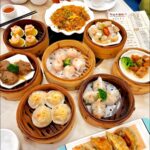
Oolong is neutral in nature – neither cooling nor warming. That’s why I love serving it with food. It doesn’t clash with hot or cold dishes. After exploring Cantonese cuisine or sitting down for authentic dim sum, oolong is the perfect companion. It cleans the palate and aids digestion.
Who is it for?
Everyone. Seriously. If you’re unsure what tea to try, start with a light oolong (like Tieguanyin) and work your way to darker roasted ones.
5. Black Tea – Warming (Fully Oxidized)
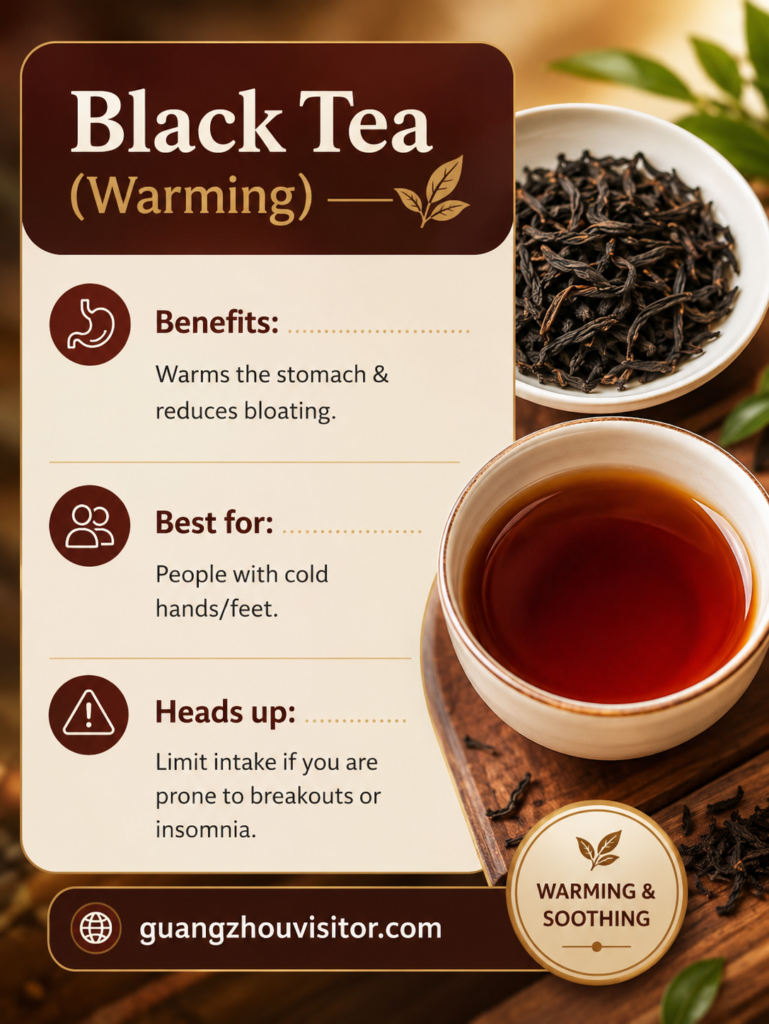
Black tea is fully oxidized. The leaves turn dark brown or black, and the flavor becomes bold, malty, and sometimes fruity or spicy. This is what most of the world calls “regular tea.”
What the experts say:
Healthline explains that black tea undergoes complete oxidation, which changes its chemical composition. It has more caffeine than green or white tea, and it contains theaflavins and thearubigins – unique antioxidants linked to cholesterol management and gut health.
My personal take:
Black tea is warming. On cool days, or when I feel tired and heavy, black tea feels like holding a small sun in my hands. Many of my friends who visit Guangzhou for business – especially during Canton Fair – love black tea in the morning. It wakes them up without the crash of coffee.
Who is it for?
If you feel cold often, need strong energy, or love adding milk and sugar to your tea – black tea is your friend.
6. Dark Tea (Pu-erh) – Warming (Aged & Fermented)
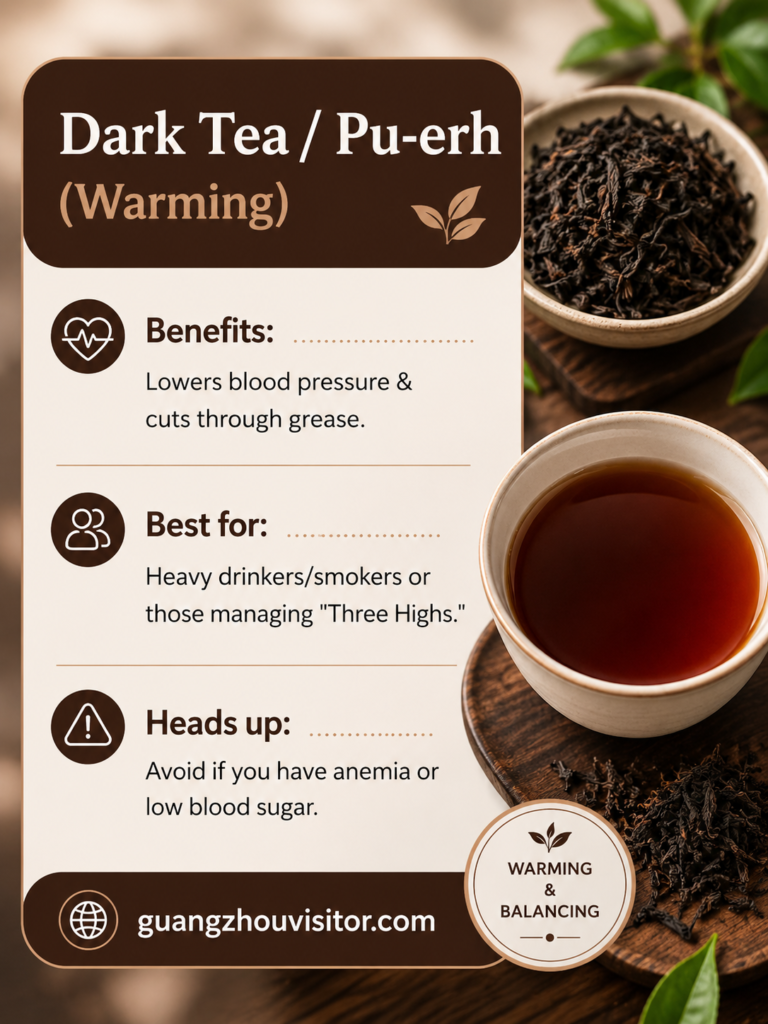
Dark tea is a completely different world. After oxidation, the leaves are fermented and often aged for months, years, or even decades. The most famous example is Pu-erh from Yunnan province.
What the experts say:
Mei Leaf describes Pu-erh as “living tea” because it continues to ferment and change over time. The flavor is earthy, smooth, mushroom-like, and completely unique. Dark tea is also known in Chinese culture as a digestive aid – often drunk after rich, heavy meals.
My personal take:
Dark tea is warming, but deeper and more grounding than black tea. In Guangzhou, we drink Pu-erh after big seafood feasts or hotpot. It settles the stomach and leaves you feeling warm and content. Trust me, after trying the best seafood spots in Guangzhou, you’ll want a cup of dark tea.
Who is it for?
Adventurous drinkers, people who enjoy earthy flavors (like coffee or mushroom broth), or anyone who eats big meals and wants better digestion.
A Simple Guide Based on Your Body
Traditional Chinese tea culture has a beautiful way of looking at tea – not just as a drink, but as something that interacts with your body.
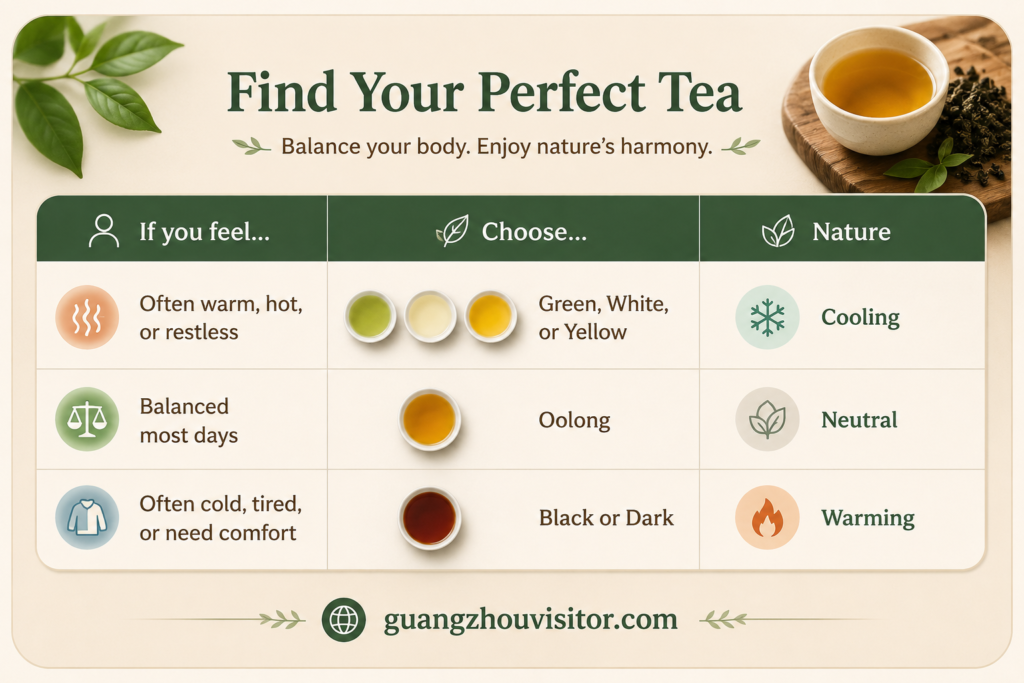
How to Start Your Tea Journey
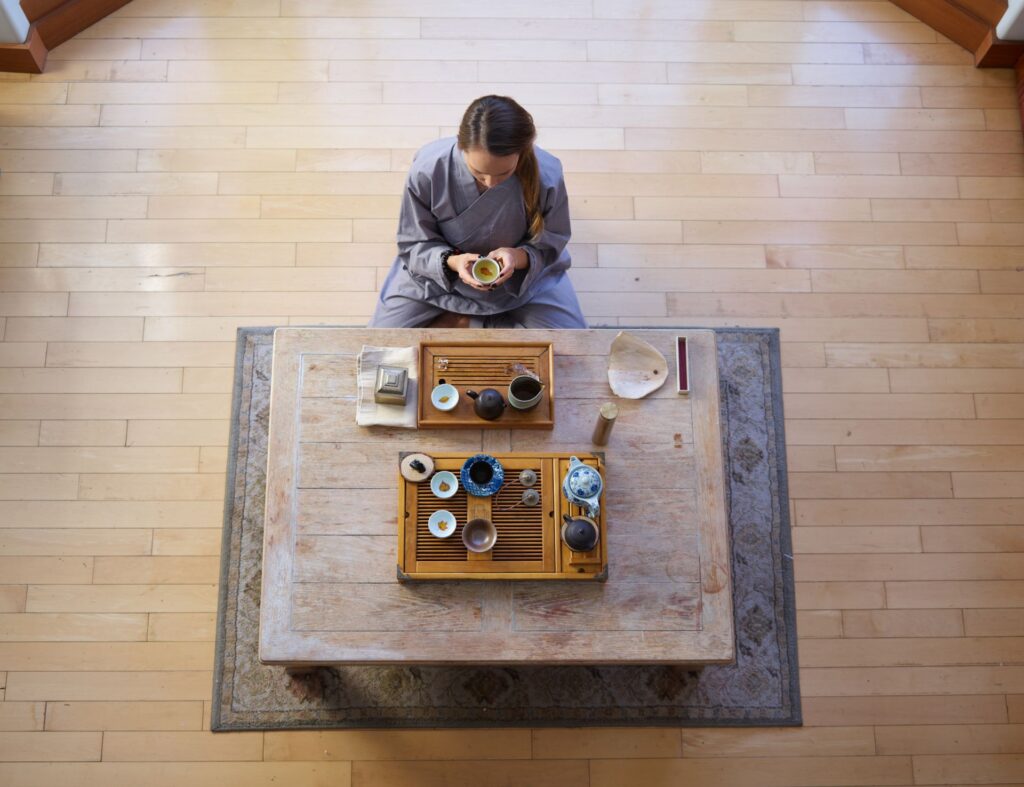
Here’s my honest advice from my tea table in Guangzhou:
- Try one tea for one week – don’t jump around. Notice how your body feels.
- Drink it plain first – no sugar, no milk. Learn the real flavor.
- Pay attention to temperature – green and white teas need cooler water (70–80°C). Black and dark teas need boiling water (100°C).
And before you plan your next trip to Guangzhou, don’t forget to read why the Canton Tower should be your next destination.
Now Tell Me: Which tea suits you best? Have you tried any of these before? I’d love to hear your experience.
Warmly from Guangzhou,
Jinhua
Sources & Further Reading:
· Yellow Tea Processing – Tea Guardian
· Oolong Tea Guide – Seven Cups
· Green Tea Benefits – NCBI / PubMed
· Black Tea vs Green Tea – Healthline
· Pu-erh Tea Guide – Mei Leaf