When I landed at Guangzhou Airport, my dear Chinese friend Hua Jin (花金, Huā Jīn) was waiting for me with a big smile.
Knowing how much I love discovering local customs, she said as soon as we got into the car:
“Tomorrow morning, I’m taking you to experience real Guangzhou morning tea!”
That night, as I unpacked at the hotel, I imagined something very simple: a quiet table, a pot of hot tea, perhaps a few light snacks.
I couldn’t have been more wrong.
The next morning, Hua Jin woke me up early and took me to a traditional Guangzhou tea house. I didn’t walk into a quiet café. Instead, I found a huge dining hall filled with local families, older residents, friends gathered around round tables, newspapers spread across tables, and servers moving between the aisles with stacks of steaming bamboo baskets.
I turned to Hua Jin in disbelief. “Where’s the little cup of tea we were supposed to drink?
”Hua Jin burst out laughing. “Welcome to Yum Cha, my dear! In Guangzhou, we don’t just drink tea. We drink tea while we eat, talk, relax, and spend time together.
”And that was my first lesson: Guangzhou Yum Cha isn’t simply breakfast. It’s a social ritual built around tea, dim sum, conversation, family, friends, and time.
If dim sum is more your thing than tea, don’t miss our 15 must-try Cantonese dishes guide – and once you’ve had your fill of savoury baskets, our Guangzhou desserts & tong sui guide covers exactly where to go next for something sweet.
What Is Guangzhou Yum Cha?
The Cantonese expression 饮茶 (yǐn chá) literally means “drinking tea.” In Guangzhou, you will also hear 早茶 (zǎo chá), meaning “morning tea.” But neither expression really captures the whole experience.
Traditional Yum Cha can stretch across a leisurely morning, with tea constantly being refilled while diners share small plates of dim sum. You might see grandparents reading newspapers, friends catching up, families eating together, and groups of older locals spending hours around the same table.
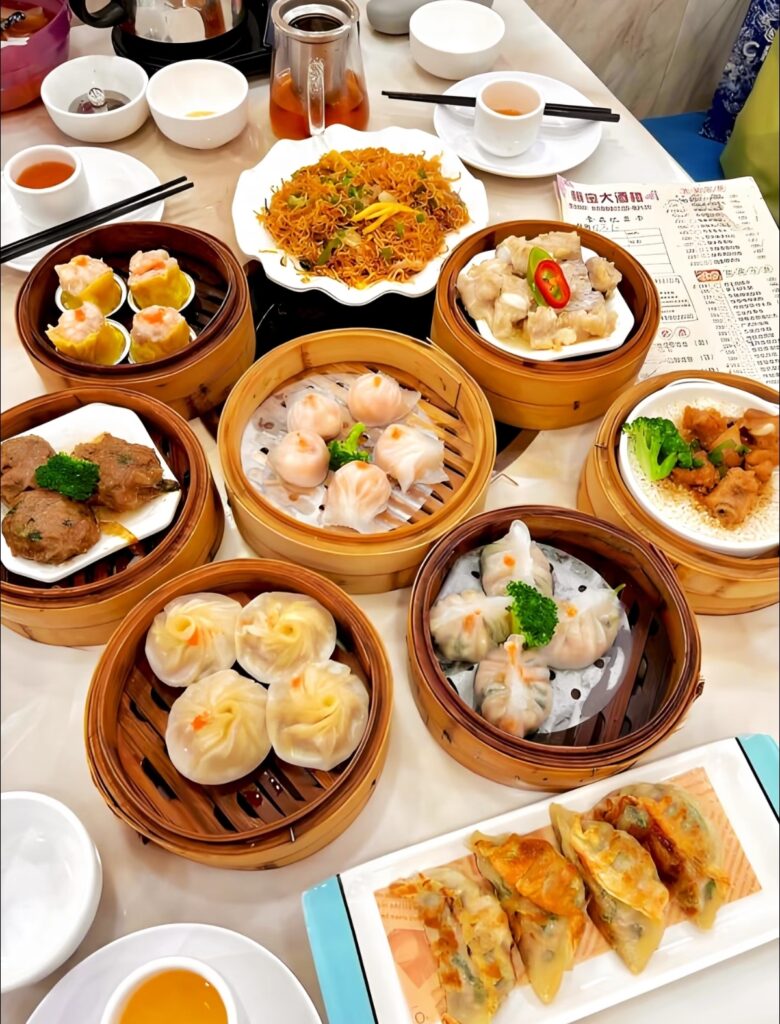
The food comes in small portions, often served in bamboo steamers, allowing everyone at the table to order several different dishes and share them. That’s why Yum Cha feels less like a conventional breakfast and more like a social occasion.
The “Four Heavenly Kings”: Understanding the Local Variations
You may hear the term “Four Heavenly Kings” (四大天王, sì dà tiān wáng) when locals talk about classic dim sum.
The exact meaning of “Four Heavenly Kings” can vary in popular food writing. Official Guangzhou sources commonly identify Har Gow, Siu Mai, Char Siu Bao and Egg Tart as the four classic representatives of Cantonese morning tea. Rice Noodle Roll is also one of the most iconic Guangzhou dim sum dishes, but it is not part of this traditional four-item list.
Regardless of which list you encounter, these dishes are all well-known parts of the Cantonese dim sum tradition.
The Classic Dishes You’ll Actually Find on the Table
While dim sum menus can feature dozens of options, a traditional Cantonese table always revolves around a core lineup of time-tested favorites. These signature dishes balance tender steamed meats, delicate seafood, and rich pastries to create the ultimate Yum Cha experience.
1. Har Gow — 虾饺 (xiā jiǎo)

Delicate steamed shrimp dumplings with translucent wrappers. Look for a thin, slightly chewy skin and a juicy, fresh shrimp filling.
2. Siu Mai — 烧卖 (shāo mài)

Open-topped dumplings, traditionally filled with pork and shrimp and often finished with a small decorative topping. Savoury, juicy, and easy to share.
3. Char Siu Bao — 叉烧包 (chā shāo bāo)
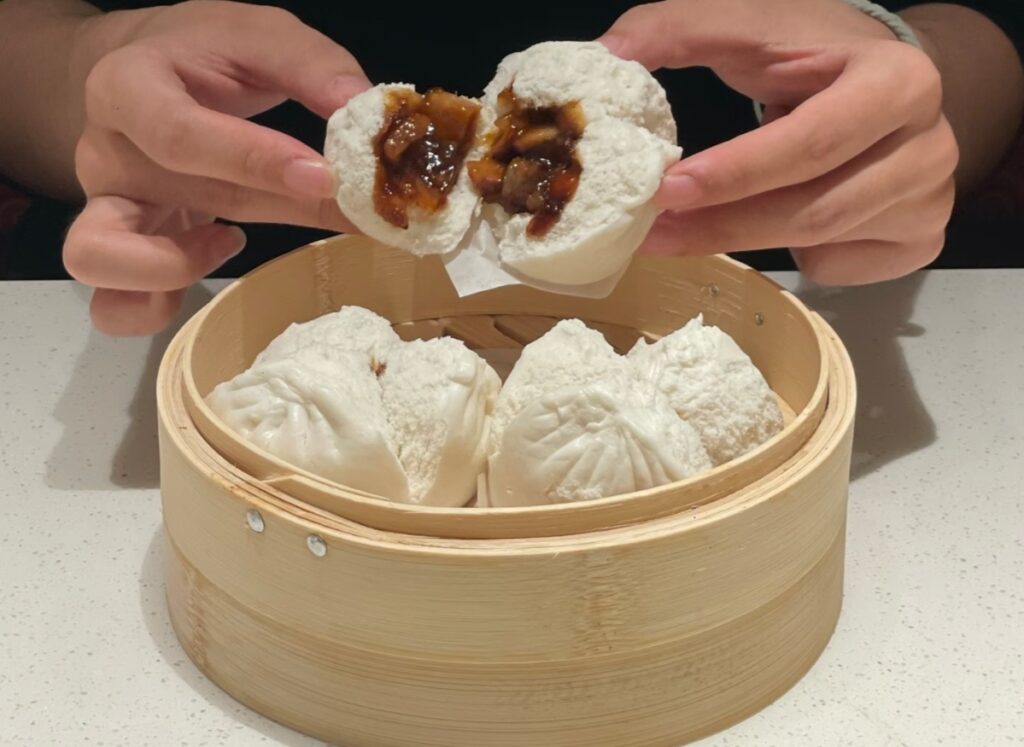
Fluffy steamed buns filled with sweet, savoury barbecued pork. When freshly steamed, the bun is soft and pillowy and the filling generous.
4. Rice Noodle Roll – 肠粉 (cháng fěn)
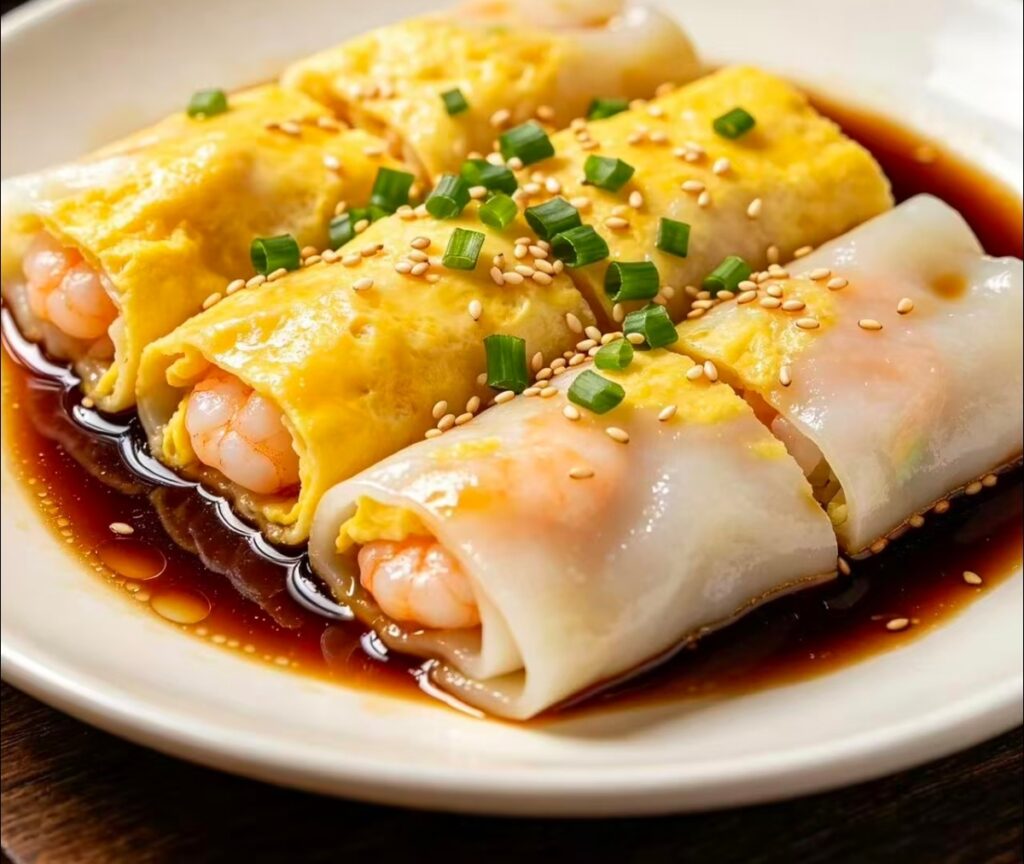
Smooth, silky steamed rice noodle sheets, usually rolled and filled with shrimp, beef, or char siu, served with a sweet soy-based sauce.
5. Egg Tart — 蛋挞 (dàn tà)
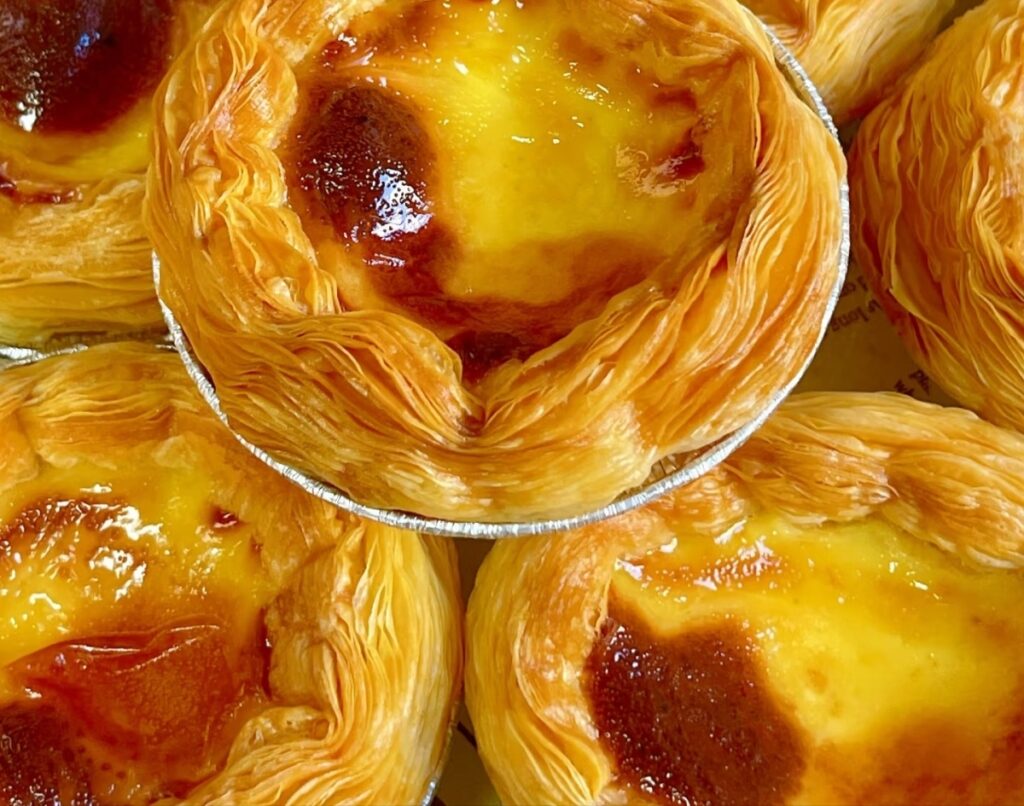
Golden pastry filled with smooth, silky egg custard — a lovely sweet ending to a dim sum meal, especially warm and freshly baked.
Curious about the teas served alongside your dim sum? Check out our Quick Guide to the 6 Main Teas – Which One Suits You?
More Must-Try Dishes Worth Ordering
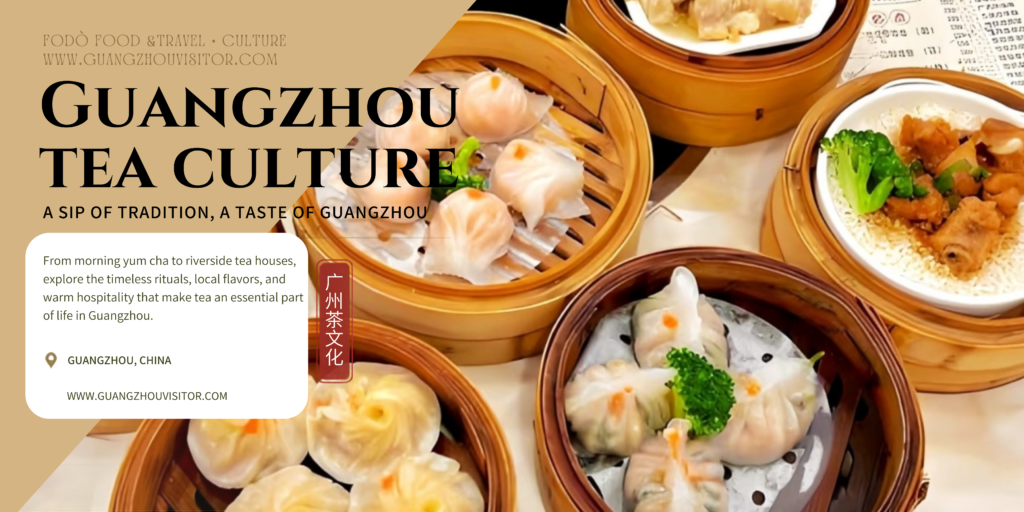
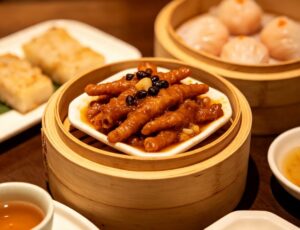
Steamed Chicken Feet with Black Bean Sauce – 豉汁蒸凤爪 – braised and steamed until tender, in a rich black-bean sauce. A classic Cantonese choice worth trying.
Crispy Red Rice Noodle Roll – 脆皮红米肠 – a modern variation using red rice noodle skin wrapped around crispy youtiao (油条) and shrimp filling.
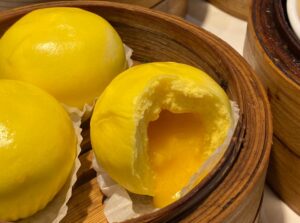
Liu Sha Bao – 流沙包 – steamed buns filled with rich salted-egg-yolk custard that turns beautifully molten when you break the bun open.
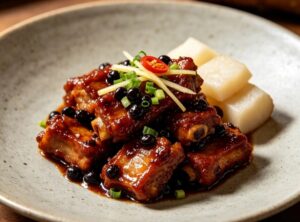
Steamed Spare Ribs with Black Bean Sauce – 豉汁蒸排骨 – tender pork ribs steamed with black bean sauce and aromatics.
Sampan Congee – 艇仔粥 – Cantonese-style rice porridge traditionally associated with Guangzhou’s waterways.
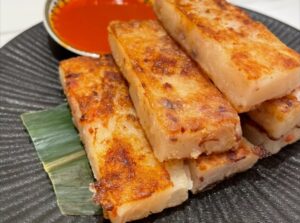
Turnip Cake – 萝卜糕 – a savoury steamed radish cake, pan-fried until lightly crisp on the outs


The Tea-Tapping Custom – 叩手礼 (kòu shǒu lǐ)
Instead of repeatedly saying “thank you” whenever someone pours tea, diners lightly tap two fingers on the table as a traditional gesture of appreciation. It’s one of those tiny cultural details you might completely miss as a visitor – but once someone explains it, you start noticing it everywhere.
Signalling for a Refill – 揭盖续水 (jiē gài xù shuǐ)
When the teapot runs low, simply lift the lid and leave it slightly open. This traditional custom signals to staff that the pot needs more hot water – much easier than trying to flag down a busy server in a crowded tea house.
One Pot, Two Dishes – 一盅两件 (yī zhōng liǎng jiàn)
This phrase refers to the traditional idea of one pot of tea (一盅 yī zhōng) accompanied by two dim sum items (两件 liǎng jiàn). You don’t need to order an enormous meal immediately – start with tea and a couple of dishes, talk, eat slowly, and order more as you go. The point isn’t to finish as much food as possible; it’s to enjoy the ritual.
Where to Have Yum Cha in Guangzhou
Instead of a simple ranking of “the five best Yum Cha restaurants,” here’s a better way to choose – each of these places represents a different side of Guangzhou’s tea-house culture. If you’d rather browse it as a self-guided food walk, our tea houses & Yum Cha culture guide pairs well with this list.
🏮 Panxi Restaurant 泮溪酒家 Pàn Xī Jiǔ Jiā est 1947
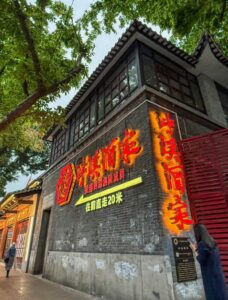
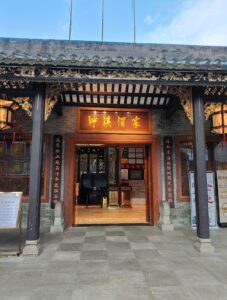
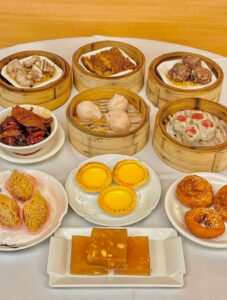


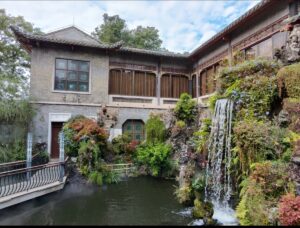


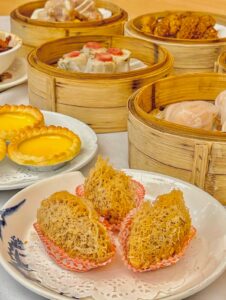
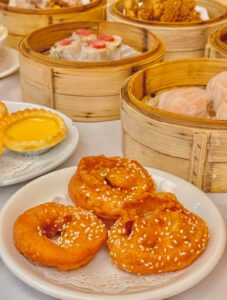

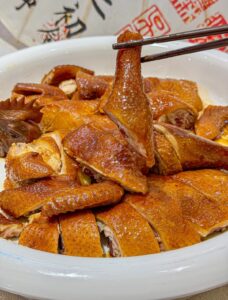


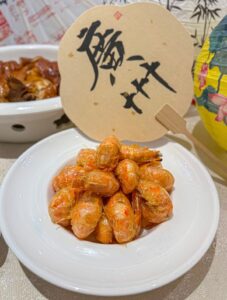


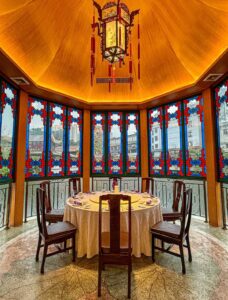
- Why go here: Panxi is one of Guangzhou’s most famous traditional garden restaurants, and the setting is a major part of the experience. Founded in 1947 beside Liwan Lake, the restaurant combines Cantonese dining with a large Lingnan-style garden of ponds, rockeries, pavilions, winding corridors and traditional architectural details. It is one of Guangzhou’s three best-known garden restaurants, together with Beiyuan and Nanyuan.
- A piece of Guangzhou history: The restaurant stands in the historic Liwan area, on land associated with the former Changhua Garden, an imperial garden dating back more than 1,000 years to the Southern Han period. Panxi began as a much smaller restaurant in 1947 before being expanded and transformed into the large garden-style restaurant known today. The later garden and architectural design was developed by renowned Lingnan garden architect Mo Bozhi. In 2023, Panxi was included in the Seventh Batch of China’s 20th-Century Architectural Heritage.
- The real attraction: If you are choosing Panxi purely for food, expectations should be realistic. Recent diner reviews are mixed: many praise the beautiful garden setting, traditional atmosphere and individual dim sum dishes, while some criticize inconsistent food temperature or feel that the food does not always match the restaurant’s reputation. The safest reason to come is therefore the combination of Cantonese food, historic atmosphere and Lingnan garden scenery rather than expecting Guangzhou’s absolute best dim sum.
- What to order: For dim sum, look for Green Rabbit Dumplings (绿茵白兔饺), Panxi Water Chestnut Cake (泮塘马蹄糕) and Panxi Shrimp Dumplings (泮溪虾饺皇). Other popular choices include Liwan Boat Congee (荔湾艇仔粥) and the restaurant’s traditional Crispy Roast Goose. Panxi is also known for larger Cantonese specialties such as Eight Treasure Winter Melon Soup (八宝冬瓜盅) and Golden Dragon Crispy Suckling Pig.
- Don’t rush the visit: Panxi is best treated as more than a quick meal stop. Walk through the garden, look around the pavilions and waterside areas, and take time to appreciate the traditional Lingnan setting. Some dining areas also offer views toward the lake, making the surroundings especially memorable during a leisurely tea or meal.
- Good for: Traditional Cantonese dim sum, garden dining, historic Guangzhou atmosphere, family meals, photography, and travelers exploring old Liwan and Xiguan. It is particularly easy to combine with nearby Liwan Lake Park and Lizhiwan, making Panxi a natural stop during a day exploring historic western Guangzhou.
- Local tip: If your priority is traditional morning tea, go earlier rather than later. Panxi is popular with local diners as well as visitors, and popular periods can be busy. If possible, ask for a table with a garden or lake view – the surroundings are one of the main reasons to choose Panxi over an ordinary Cantonese restaurant. Current listings place the restaurant about a 13-minute walk from Changshou Lu Station (Line 1, Exit B).
📍 Location
🏮 Taotao Ju – Shifu Road Main Store 陶陶居酒家 Táo Táo Jū Jiǔ Jiā
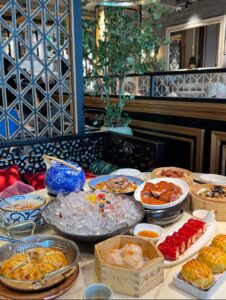

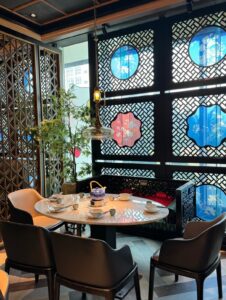

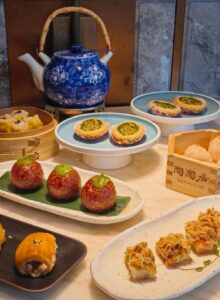


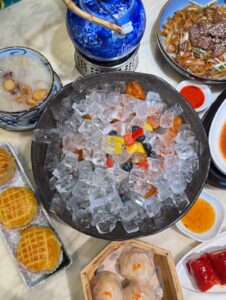
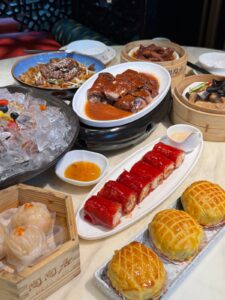
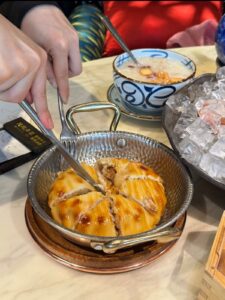


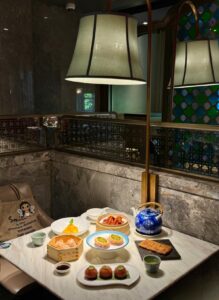

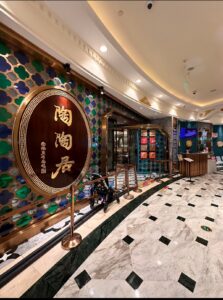
- Steeped in over 140 years of history, Taotaoju Restaurant (陶陶居酒家) is one of Guangzhou’s most legendary dining establishments. Founded in 1880 during the Qing Dynasty, this historic tea house has been a silent witness to the city’s evolution from the imperial era through to the present day. Its very name, which means “joy in tea drinking”, was penned by the famed scholar Kang Youwei, whose calligraphic signboard still graces the restaurant today. Over the decades, it has hosted a who’s who of Chinese cultural icons, including Lu Xun, Ba Jin, and Liu Haisu.
- The main branch, located at No. 20 Dishifu Road in the heart of Guangzhou’s historic Xiguan (West Gate) district, is a destination in itself. After a meticulous renovation costing over 76 million yuan, the building was restored to its 1925 appearance. Stepping inside is like stepping back in time; the three-story structure is a showcase of exquisite Lingnan architecture, featuring vibrant Manzhou windows, intricate wood carvings, and traditional Cantonese floor tiles. The ground floor even boasts an open kitchen where diners can watch masters craft their famous dim sum by hand.
- Taotaoju is a pilgrimage site for yum cha (morning tea) enthusiasts and is famed for its impeccable dim sum. Must-try signature dishes include the Taotaoju King Prawn Dumpling (plump, with a thin, 13-15 fold skin), the Braised Chicken Feet with Supreme Soy Sauce (so tender they fall off the bone), and the innovative Iced Sweet and Sour Pork. The restaurant is a vibrant, bustling hub of Cantonese life, especially during the early morning tea rush.
- Local tip: To fully experience the traditional morning tea ritual, arrive early. Taotaoju is incredibly popular with both locals and tourists, and securing a table during peak hours can be a challenge. The main branch is conveniently located about an 8-10 minute walk from either Huangsha Station or Changshou Lu Station on Metro Line 1. For a truly memorable experience, take your time to explore the restaurant’s beautifully restored interiors – they are as much a part of the meal as the food itself.
📍 Location
🏮 Yutang Chunnuan at White Swan Hotel 玉堂春暖 Yù Táng Chūn Nuǎn
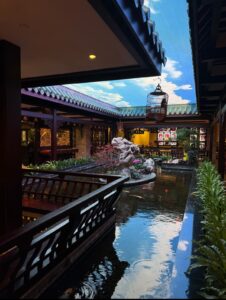


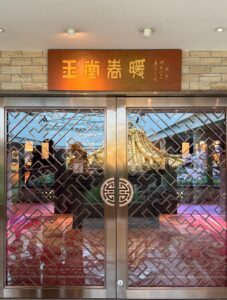

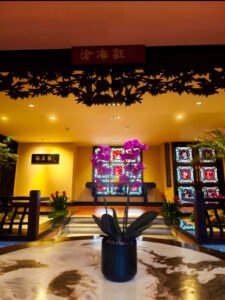

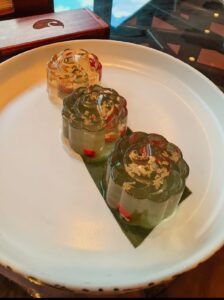
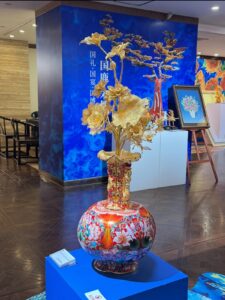
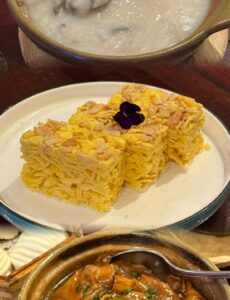

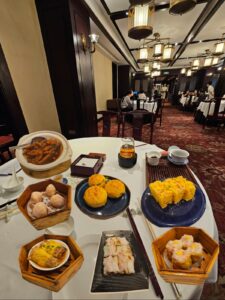
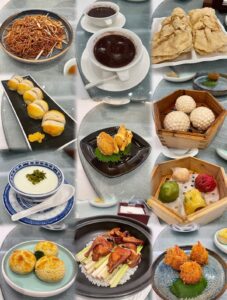


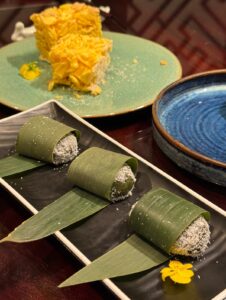

- Steeped in rich culinary prestige inside the iconic White Swan Hotel on Shamian Island, Yutang Chunnuan (玉堂春暖 · Yù Táng Chūn Nuǎn) is one of Guangzhou’s most celebrated dining institutions, proudly awarded both a Michelin Star and Black Pearl honors.
- Designed around a breathtaking indoor Cantonese garden featuring traditional Lingnan pavilions, koi ponds, and cascading waterfalls, dining here offers a serene, imperial-era atmosphere overlooking the Pearl River.
- Opened in 1983 within China’s first Sino-foreign cooperative five-star hotel, this historic establishment has hosted foreign dignitaries, royalty, and cultural figures for decades, standing as a true symbol of refined Cantonese hospitality.
- Revered by food connoisseurs as the pinnacle of authentic Yum Cha (早茶 · zǎochá / morning tea), its master chefs handcraft legendary dim sum using time-honored techniques and premium seasonal ingredients.
- Must-try signature dim sum dishes include the famous Pine Nut Sachima (榄仁萨其马 · lǎnrén sàqímǎ), Crispy Baked BBQ Pork Buns (酥皮叉烧包 · sūpí chāshāobāo), Four-Color Shrimp Dumplings (四色虾饺 · sìsè xiājiǎo), and the exquisite Abalone Swan Pastry (鲍汁天鹅酥 · bàozhī tiān’ésū).
- Beyond morning tea, the restaurant excels in high-end Cantonese mains, highlighted by table-side roasted Iberian Pork Char Siu (伊比利亚黑毛猪叉烧 · Yībǐlìyà hēimáozhū chāshāo) and refreshing seasonal creations like Crystal Litchi Jelly (水晶荔枝冻 · shuǐjīng lìzhīdòng).
- Local tip: Being one of the most sought-after dining experiences in the city, tables fill up extremely fast; staying at the White Swan Hotel or securing an early reservation is highly recommended to avoid long waits.
- The restaurant is located on historic Shamian Island, an easy 8-10 minute walk from Huangsha Station (黄沙站 · Huángshā Zhàn) on Metro Lines 1 & 6, making it perfect to combine with a scenic stroll through the island’s European colonial architecture.
🏨 Where to Stay Nearby

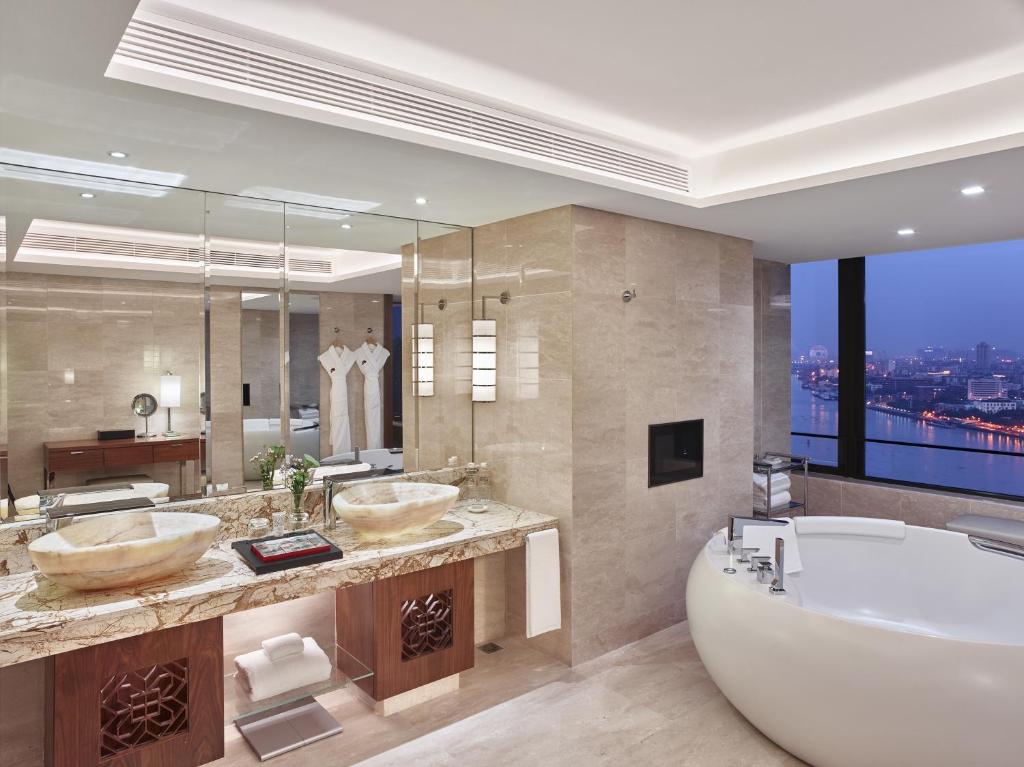
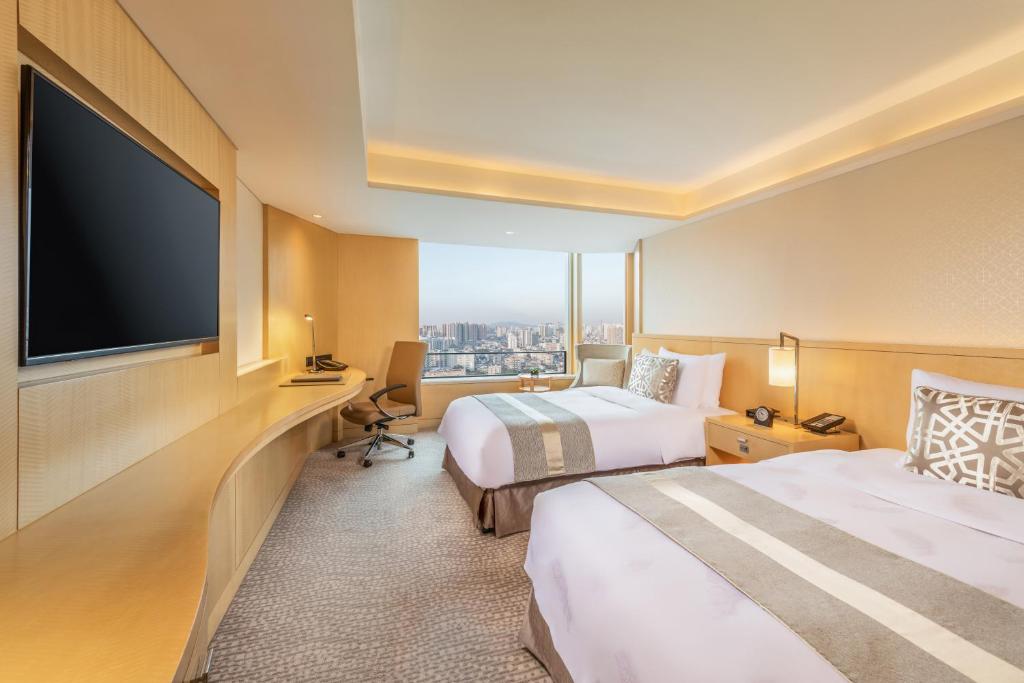
Staying Near Shamian & Liwan for Easy Tea House Access
Want to be steps from Panxi, Taotao Ju, and the White Swan Hotel? Basing yourself in Liwan or Shamian puts you within walking distance of Guangzhou’s best tea houses – no long metro rides before your morning tea.
🏮 Dian Dou De – Huacheng Branch 点都德花城店 Diǎn Dōu Dé · Huā Chéng Diàn

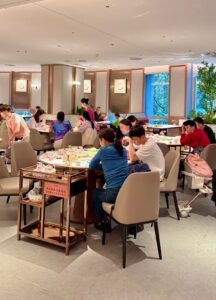
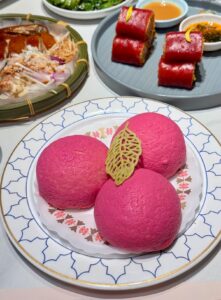


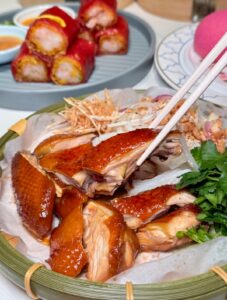
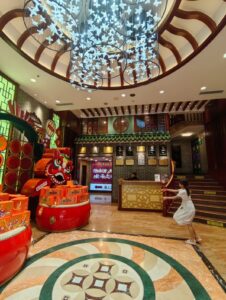
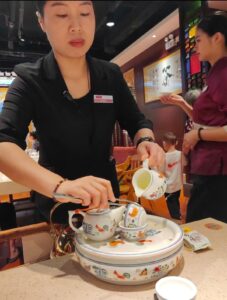
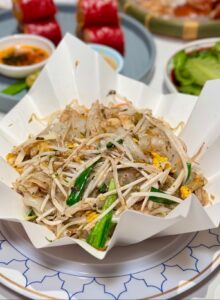
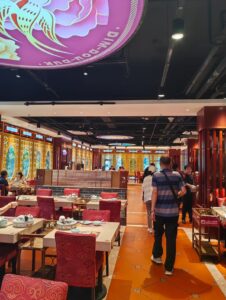

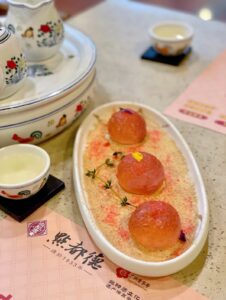
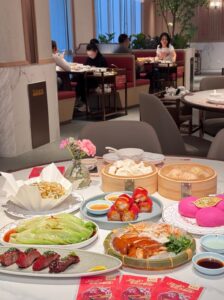

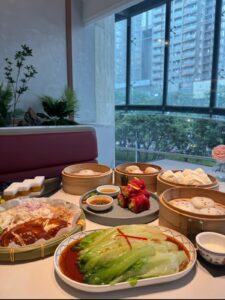


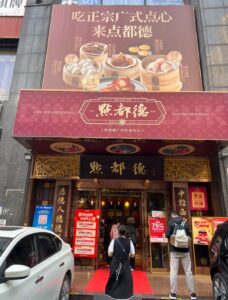
- Located in the vibrant heart of Zhujiang New Town, Dian Dou De – Huacheng Branch (点都德·花城店 · Diǎn Dōu Dé · Huā Chéng Diàn) is a celebrated flagship for authentic yet modern Cantonese Yum Cha (早茶 · zǎochá / morning tea).
- Blending traditional Lingnan aesthetics with contemporary style, the restaurant features striking emerald green and gold accents alongside floor-to-ceiling windows that offer a 270-degree view of the skyline and the iconic Canton Tower (小蛮腰 · Xiǎományāo).
- Celebrated for preserving handcrafted dim sum culture in a bustling urban setting, it provides a lively and welcoming atmosphere loved by local neighborhood regulars, young professionals, and visiting travelers alike.
- Every dish is freshly steamed to order, showcasing skilled culinary craftsmanship that brings out the vibrant, natural flavors of traditional Cantonese tea culture.
- Must-try signature dim sum dishes include the Golden Net Crispy Prawn Rice Roll (金莎海虾红米肠 · jīnshā hǎixiā hóngmǐcháng), King Prawn Dumplings (招牌虾饺皇 · zhāopái xiājiǎohuáng), Steamed BBQ Pork Buns (蜜汁叉烧包 · mìzhī chāshāobāo), and Flaky Egg Tarts (松化鸡蛋挞 · sōnghuà jīdàntà).
- Beyond classic savory bites, the menu features comforting staples like Ting Zai Boat Congee (荔湾艇仔粥 · Lìwān tǐngzǐzhōu) and sweet delights like Litchi Lava Pastries (荔枝流心饼 · lìzhī liúxīnbǐng).
- Local tip: As one of the most popular dim sum spots in central Tianhe, weekend morning rush hours draw large crowds, so arriving before 10:00 AM or planning an off-peak visit is highly recommended to secure a window seat.
📍 Location
🏮 Luyun Tea House – Tiyu West Branch 禄运茶居手工点心体育西店

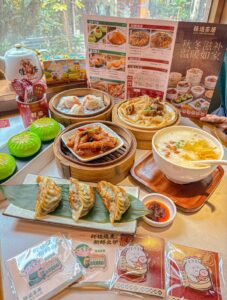


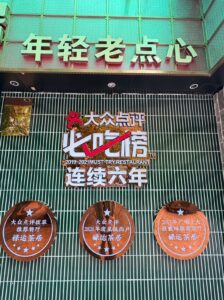
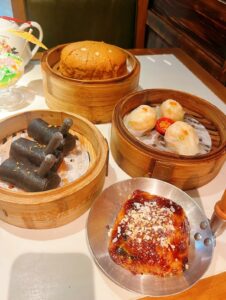
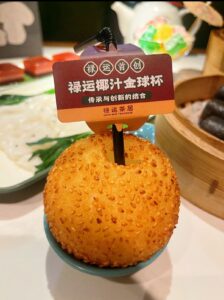
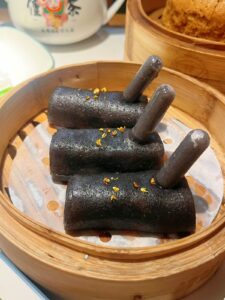
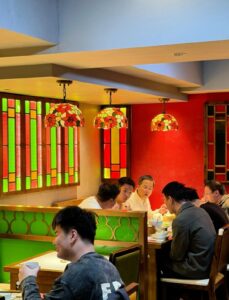


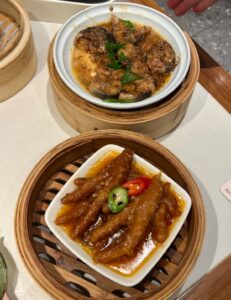
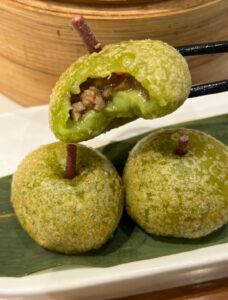

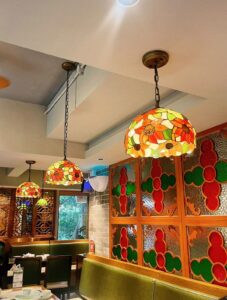
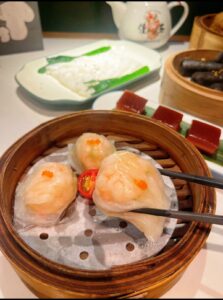

- Tucked away inside the historic Liuyun residential neighborhood (六运小区 Liùyùn Xiǎoqū), Luyun Tea House – Tiyu West Branch (禄运茶居手工点心体育西店 Lùyùn Chájū Shǒugōng Diǎnxīn Tǐyùxī Diàn) is Guangzhou’s pioneer neighborhood-style Cantonese dim sum house.
- Honored on the prestigious Dianping Must-Eat List (大众点评必吃榜 Dàzhòng Diǎnpíng Bìchī Bǎng) for 7 consecutive years, this local gem is widely celebrated as a leading brand for authentic, handmade Cantonese dim sum chains.
- Championing the belief that traditional dim sum should never be pre-made or mass-manufactured, the restaurant features an open-view kitchen (明档厨房 míngdàng chúfáng) where diners can watch master chefs hand-roll dumpling skins and craft fresh bites to order.
- Adorned with nostalgic Lingnan-style decor (岭南风 Lǐngnán fēng) and warm mahogany furnishings, the venue blends a cozy, old-school Cantonese tea house charm with a laid-back, community-centric atmosphere.
- Must-try signature dim sum dishes include the Gold Medal Luyun Prawn Dumplings (金牌禄运虾饺皇 jīnpái lùyùn xiājiǎohuáng – packed with up to 5 plump prawns per dumpling), Steamed Chicken Feet with Supreme Soy Sauce (酱皇豉椒蒸凤爪 jiànghuáng chǐjiāo zhēng fèngzhuǎ), and the limited-daily Salted Egg Yolk Sha Weng (咸蛋黄糖沙翁 xiándànhuáng tángshāwēng).
- Alongside timeless favorites, the menu offers creative fusion creations and nostalgic treats, such as the Spicy Emerald Jade Rice Roll (翡翠椒香玉润肠 fěicuì jiāoxiāng yùrùncháng), Exploding Black Sesame Roll (爆浆黑芝麻卷 bàojiāng hēizhīmajǎn), Shunde Fresh Fish Congee (顺德鱻鱼皇粥 Shùndé xiānyúhuángzhōu), and retro 1990s-style Jelly Cups (童年回忆啫喱杯 tóngnián huíyì zhělíbēi).
- Local tip: Extremely popular among local neighbors, families, and foodies, peak weekend wait times can easily reach 1 to 2 hours; arriving early before 9:00 AM or planning a weekday morning visit is strongly advised.
- The restaurant is located on the 2nd/3rd floor of Wenchang Business Building (文昌商务楼 Wénchāng Shāngwù Lóu), at No. 17 Liuyun 1st Street (六运一街17号 Liùyùn Yījiē 17 hào), just a 200-meter walk from Exit B or Exit G of Tiyu West Road Station (体育西路站 Tǐyùxīlù Zhàn) on Metro Lines 1 & 3.
📍 Location
Traditional vs. Modern: Which Yum Cha Experience Should You Choose?
A Few Tips for Your First Guangzhou Yum Cha
- Don’t rush. Yum Cha isn’t meant to feel like fast food — give yourself time to sit, drink tea, share dishes, and watch what’s happening around you.
- Start small. Order two or three dishes first, then order more once you know what you like.
- Learn the tea-tapping gesture. A light finger tap on the table thanks whoever poured your tea.
- Know the teapot lid signal. Lift the lid and leave it slightly open (揭盖续水) for a refill.
- Don’t be afraid of unfamiliar dishes. Chicken feet, turnip cake, sampan congee — try one, that’s part of the experience.
- Ask about the tea. Pu-erh and chrysanthemum Pu-erh (菊普茶, jú pǔ chá) are both classic choices with dim sum.
- Don’t assume every tea house works the same way. Some use paper menus, some QR codes — modern branches are usually the easiest for visitors.
- Don’t confuse Yum Cha with simply “going out for breakfast.” The social experience matters as much as the food.
Looking for Yum Cha Near You in Guangzhou?
Start with the district you’re already visiting rather than crossing the entire city for a famous name.
Staying in Liwan? Try Panxi for a traditional atmosphere or Taotao Ju if you’re exploring Xiguan and Shangxiajiu.
Staying around Tianhe? Dian Dou De offers a modern, convenient option, while Luyun Tea House is worth considering for handmade dim sum and a local feel.
Exploring Shamian? Make Yutang Chunnuan part of your Shamian itinerary for a more refined Cantonese dining experience.
Explore Guangzhou with Locals: Fresh Market, Authentic Eats & Tea Culture
Skip the tourist traps and see how Guangzhou really eats. This tour walks you through a bustling local market, stops for authentic street eats along the way, and ends with a proper Cantonese tea culture experience – all with a local guide who knows exactly where to go.
Book This Tour →
The Local Secret: Look Beyond the Famous Names
The best experience isn’t necessarily found at the restaurant with the biggest reputation. Sometimes you get a more everyday glimpse of Guangzhou by finding an older neighbourhood tea house filled with local residents. Watch where the older people go. Look for restaurants busy with families and regular customers. Don’t be afraid to leave the most tourist-heavy streets — that’s where you may discover the kind of ordinary Guangzhou morning that travellers rarely see in photographs.
My Guangzhou Yum Cha Plan
What Guangzhou Yum Cha Taught Me
Walking between the traditional atmosphere of Liwan and the modern restaurants of Tianhe, I finally understood what Hua Jin had been trying to show me. Guangzhou Yum Cha is far more than breakfast – it is food, tea, conversation, family, friendship, and a little piece of everyday Cantonese life, all happening around the same table.
So if you come to Guangzhou, don’t just drink the tea. Sit down. Order some dim sum. Watch the room. Tap your fingers on the table. Give yourself time to experience Guangzhou around the same table where generations of locals have enjoyed tea, food, and conversation. That is Guangzhou Yum Cha.
New to the city? Start with our complete Guangzhou travel guide, then come back here when you’re ready for your first pot of tea.